

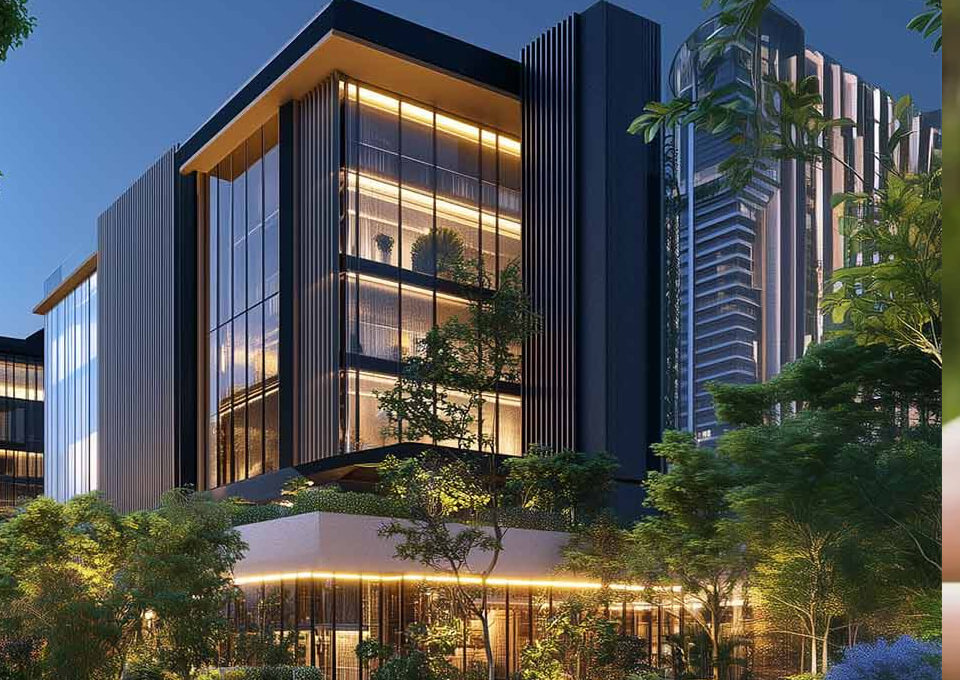
Real estate as a long-term social actor
In Mauritius, real estate projects are often discussed in terms of scale, value, and economic impact. Less frequently examined is their role as long-term social actors within the communities they occupy. Buildings do not exist in isolation. They shape neighbourhoods, influence livelihoods, and affect daily life long after construction ends.
For groups with long-standing roots on the island, such as the Apavou Group, this reality has been impossible to ignore. Over decades of activity across hospitality, residential, and commercial development, the Group has operated within towns, villages, and employment ecosystems that continue to evolve alongside its projects.
This article explores how real estate projects can genuinely support local communities, using the Mauritian context as a reference point. Rather than framing corporate social responsibility as a standalone activity, the focus here is on how responsible choices made during planning, construction, and operation can create durable community value.
Understanding community impact in real estate
Beyond economic contribution
Real estate projects are often justified through job creation, tax revenue, and investment flows. While these contributions matter, they represent only part of the picture.
Communities experience projects at a human scale: access to services, quality of public space, employment stability, environmental impact, and social cohesion. A development that performs well financially but disrupts daily life may still be perceived negatively.
In Mauritius, where land is limited and communities are closely connected, these effects are amplified.
Long-term presence changes responsibility
Unlike temporary industries, real estate projects are permanent or semi-permanent fixtures. Hotels, malls, offices, and residential developments remain embedded in their surroundings for decades.
This permanence increases responsibility. Developers and owners influence how areas grow, how people move, and how resources are used over time.
Planning with community context in mind
Understanding the local environment
Community support begins long before construction. It starts with understanding the social, environmental, and economic context of a site.
In Mauritius, this includes:
- Existing neighbourhood patterns
- Access to transport and services
- Environmental sensitivities
- Employment needs
Projects that ignore this context risk creating friction with surrounding communities.
Groups like the Apavou Group, with long-term exposure to local markets, have learned that alignment with context reduces conflict and improves acceptance.
Integrating projects rather than isolating them
Developments that integrate into existing environments tend to generate more sustainable community outcomes. This can include pedestrian access, shared infrastructure, or services that benefit both occupants and nearby residents.
For example, commercial assets such as Plaisance Mall serve not only tenants and visitors, but also provide everyday services to surrounding communities, reinforcing daily utility rather than exclusivity.
Employment as a foundation of community support
Jobs beyond construction
Construction employment is often temporary. Long-term community support depends on operational employment once a project is delivered.
Hospitality assets owned by the Apavou Group, including hotels such as Ambre and La Plantation Resort & Spa, provide sustained employment across operations, maintenance, administration, and services.
These roles contribute to income stability, skills development, and local economic continuity.
Skills development and internal mobility
Long-standing operations create opportunities for training and progression. Employees can build careers rather than short-term roles.
In Mauritius, where hospitality and services play a major role in employment, this continuity supports social stability and intergenerational opportunity.
Residential projects and quality of life
Housing as community infrastructure
Residential developments are not just housing units; they are social environments. Design decisions influence how people interact, how children play, and how communities form.
Projects such as Terre d’été, developed with attention to livability and coherence, illustrate how residential real estate can support stable, long-term communities rather than transient populations.
Long-term occupation over short-term turnover
Developments designed for long-term occupation tend to foster stronger community ties. Residents invest emotionally and socially in their surroundings.
In Mauritius, where family and neighbourhood connections remain central to social life, this stability matters.
Commercial spaces as everyday community assets
Accessibility and daily utility
Commercial developments often attract scrutiny when perceived as exclusive or disruptive. However, when designed around everyday needs, they can become community assets.
Plaisance Mall’s positioning as a practical shopping centre illustrates how commercial real estate can serve daily life rather than displace it.
Accessible services reduce travel time, support local employment, and strengthen neighbourhood convenience.
Supporting small and medium enterprises
Commercial spaces also provide opportunities for local businesses. Tenant diversity supports entrepreneurship and economic participation beyond large corporate actors.
This inclusivity contributes to local economic resilience.
Hospitality projects and local integration
Hotels as community employers
Hotels are often perceived as serving visitors only. In reality, they are deeply connected to local communities through employment, sourcing, and services.
Properties operated by the Apavou Group rely heavily on local staff, suppliers, and service providers, embedding them within regional economies.
Respecting cultural and environmental context
Hospitality developments that respect local culture and environment tend to generate stronger community acceptance. This includes architectural sensitivity, environmental care, and engagement with local traditions.
In island economies like Mauritius, where tourism and community life coexist closely, this balance is essential.
Environmental responsibility and community wellbeing
Environmental impact as a social issue
Environmental decisions directly affect community health and quality of life. Water management, waste handling, and energy use influence surrounding ecosystems and resources.
Real estate projects that manage these responsibly contribute indirectly to community wellbeing.
Practical sustainability over symbolism
CSR impact is strongest when sustainability measures are practical rather than symbolic. Efficient systems, responsible land use, and long-term maintenance matter more than branding.
This pragmatic approach aligns with long-term asset stewardship.
Governance and long-term accountability
Ownership creates responsibility
Projects held long-term create a different relationship with communities than assets intended for quick resale. Owners must live with the consequences of their decisions.
The Apavou Group’s long-term ownership model reinforces accountability and encourages thoughtful planning.
Learning from decades of presence
Over decades, relationships between projects and communities evolve. Experience helps refine approaches and avoid repeating mistakes.
The influence of Armand Apavou on long-term thinking is reflected in this learning-oriented mindset.
CSR as an integrated practice, not a separate function
Moving beyond isolated initiatives
In many organisations, corporate social responsibility is treated as a parallel activity, disconnected from core operations. In real estate, this approach often limits impact. True community support occurs when responsibility is embedded directly into how projects are planned, built, and managed.
For long-established groups such as the Apavou Group, operating across Mauritius for decades, CSR has increasingly taken the form of operational responsibility rather than standalone programs. Decisions around land use, employment practices, environmental management, and asset longevity all contribute to social outcomes.
This integration ensures that responsibility is continuous, not episodic.
Responsibility across the asset lifecycle
Community impact does not stop once construction ends. Hotels, commercial centres, offices, and residential developments influence their surroundings throughout their lifecycle.
Operational choices such as maintenance standards, supplier selection, and staff management shape daily interactions with communities. This long-term perspective is particularly relevant in island economies, where assets remain visible and influential for generations.
Education and youth engagement through real estate ecosystems
Real estate as a learning environment
Large real estate projects create ecosystems that extend beyond buildings. Hospitality properties, commercial centres, and residential developments require a wide range of skills, from technical maintenance to customer service and management.
These environments can support education and youth engagement by offering exposure, training, and entry points into stable employment. In Mauritius, where youth employment and skills development remain important social priorities, this role is significant.
Long-term careers, not temporary roles
Hospitality assets owned by the Apavou Group have historically provided long-term employment opportunities. Over time, these roles support skills transfer, internal mobility, and professional development.
This continuity contributes to community stability and intergenerational opportunity, particularly in regions where employment options may be limited.
Health, wellbeing, and quality of life
Built environments and daily wellbeing
Real estate projects influence physical and mental wellbeing. Housing quality, access to green space, workplace conditions, and service availability all affect how people live and work.
Residential developments such as Terre d’été, designed for long-term occupation, demonstrate how attention to layout, light, circulation, and community space can support everyday wellbeing.
Similarly, commercial and office environments that prioritise accessibility and usability contribute to healthier daily routines.
Hospitality and community care
Hotels are often large employers and service providers within their regions. Responsible management practices, safe working conditions, and staff wellbeing programs indirectly support broader community health.
In Mauritius, where hospitality plays a central economic role, these practices ripple beyond individual properties.
Environmental stewardship as community protection
Environmental responsibility affects people directly
Environmental issues are not abstract for local communities. Water usage, waste management, energy consumption, and land alteration directly affect shared resources.
Real estate projects that manage these responsibly reduce strain on ecosystems that communities depend on. In island contexts, where environmental systems are fragile, this responsibility is amplified.
Practical measures with lasting impact
Effective environmental responsibility focuses on systems that endure. Efficient water management, responsible waste handling, and energy optimisation deliver tangible benefits over time.
Rather than symbolic gestures, these measures support both asset performance and community resilience.
Measuring impact beyond visibility
CSR is not always visible
The most meaningful community support is often quiet. Stable employment, consistent service provision, and environmental care rarely attract attention, yet they shape daily life.
For long-term property owners, success is measured less by visibility and more by absence of conflict, continuity of use, and community acceptance.
Listening to local feedback
Over decades, community feedback becomes a valuable indicator of impact. Projects that integrate well tend to encounter fewer disputes and stronger informal support.
This feedback loop informs future decisions and strengthens relationships.
Governance and accountability in long-term ownership
Ownership creates accountability
Developers who retain ownership remain accountable for outcomes long after delivery. This accountability encourages careful planning and responsible management.
The Apavou Group’s ownership-led approach reinforces this responsibility. Assets are not transferred quickly, making long-term consequences unavoidable.
Leadership influence and continuity
The influence of Armand Apavou on long-term thinking remains visible in the Group’s governance culture. Decisions are evaluated not only for immediate feasibility, but for their lasting impact on assets and communities.
This continuity supports trust and stability.
CSR as a contributor to asset resilience
Social alignment reduces risk
Projects aligned with community needs face fewer disruptions. Social acceptance reduces operational risk, reputational exposure, and regulatory friction.
From a long-term perspective, CSR is not only ethical but strategic.
Community support strengthens longevity
Assets that support communities tend to endure longer. Occupancy remains stable, operations run smoothly, and reinvestment is more effective.
This resilience reinforces the value of responsibility as part of asset stewardship.
Lessons for real estate development in Mauritius
Community is part of the project
Real estate projects cannot succeed in isolation. Communities are not external stakeholders; they are part of the operating environment.
Understanding this reality improves outcomes for both developers and residents.
Long-term thinking outperforms short-term gestures
In Mauritius, where land and relationships are enduring, short-term CSR gestures rarely compensate for poor planning. Long-term responsibility, embedded in operations, delivers lasting benefit.
The future of community-focused development
Evolving expectations
Community expectations continue to evolve. Transparency, environmental care, and inclusive development are increasingly important.
Real estate groups with long-term presence are well positioned to adapt, drawing on experience and institutional memory.
Responsibility as a continuous process
CSR is not a destination. It is an ongoing process shaped by changing social, economic, and environmental conditions.
For the Apavou Group, responsibility remains inseparable from how assets are developed, operated, and maintained across Mauritius.
Real estate as a shared space
Real estate projects shape more than skylines. They influence how communities live, work, and interact for decades.
By integrating responsibility into planning, construction, and operations, real estate groups can support local communities in ways that are durable and meaningful.
In Mauritius, where land is limited and relationships endure, this approach matters. Through long-term ownership, operational discipline, and respect for context, real estate can become a partner in community resilience rather than a source of tension.
For Apavou CSR, the focus remains clear: supporting communities through responsible, lasting development.
 Next Post