
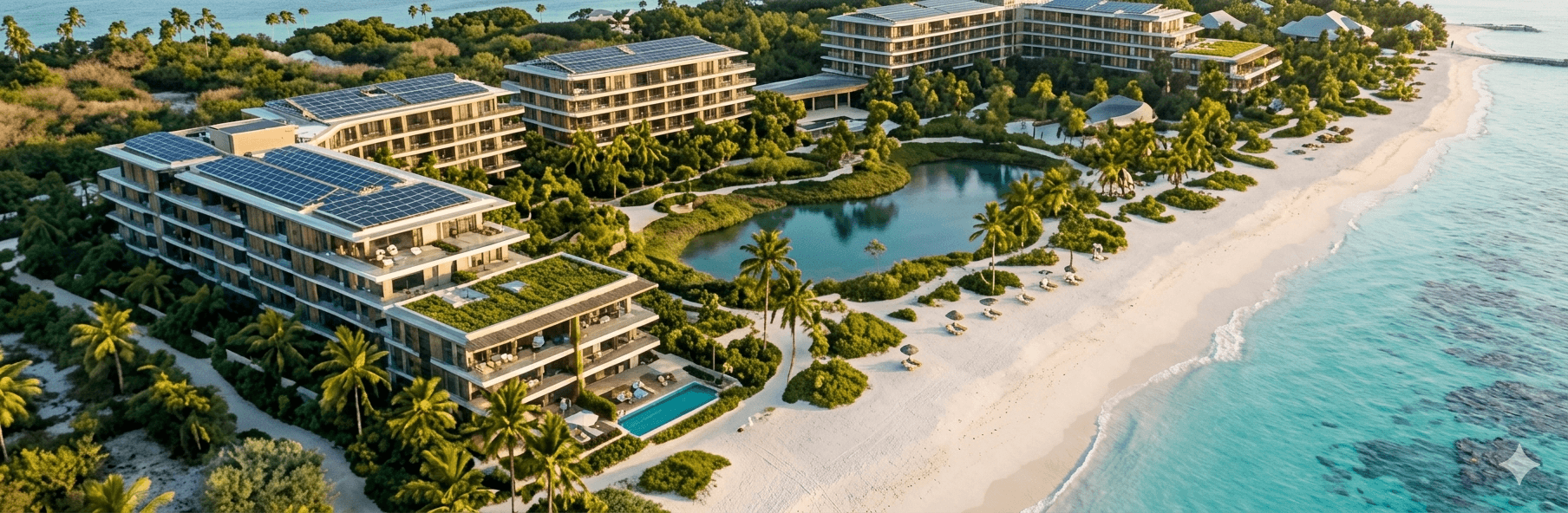

Corporate social responsibility in real estate development extends well beyond compliance with regulatory requirements; genuine CSR involves a deliberate commitment to supporting the communities affected by and surrounding a development, both during construction and throughout the asset’s ongoing operational life. Examining the kind of CSR approach a group like Apavou Group might apply around a development like Terre d’été offers insight into what meaningful community-focused responsibility looks like in the context of Mauritian residential development.
Distinguishing authentic CSR from reputational marketing
A recurring challenge in evaluating any organisation’s CSR claims involves distinguishing authentic, substantively implemented community responsibility from initiatives designed primarily for reputational or marketing purposes, with comparatively modest genuine community benefit. Useful indicators of authenticity include whether CSR commitments are sustained consistently over time rather than concentrated narrowly around periods of heightened public attention, whether initiatives are accompanied by transparent, verifiable reporting on actual outcomes rather than purely promotional messaging, and whether community members themselves, rather than only the organisation making the claims, would independently characterise the initiatives as genuinely beneficial. Applying this kind of critical evaluation lens, rather than accepting CSR claims purely at face value, is a valuable practice for anyone seeking to genuinely understand a developer’s community impact, rather than simply its public messaging about that impact.
This kind of scrutiny benefits genuinely committed developers as much as it protects communities from superficial CSR efforts, since organisations with authentic, well-substantiated community programs generally welcome this closer examination, confident that their track record will bear it out, in contrast to organisations relying more heavily on promotional messaging that a more rigorous evaluation would likely reveal to be considerably thinner than initially presented.
Supporting education and skills development beyond direct construction employment
Beyond direct construction-phase employment, some of the most impactful CSR initiatives around major residential developments involve longer-term investment in education and skills development within the surrounding community, support for local schools, scholarship or apprenticeship programs, or partnerships with vocational training institutions that build skills relevant well beyond the specific timeline of a single development’s construction phase. These kinds of investments, while requiring a longer time horizon to show measurable impact than more immediate initiatives like direct hiring, tend to generate more durable, lasting community benefit precisely because they build capabilities that remain valuable to community members regardless of whether they end up working directly on the specific development that helped fund their training.
CSR as an extension of stewardship philosophy
For a group with a long-term stewardship orientation toward its developments, CSR naturally extends beyond the boundaries of the development itself to encompass the broader surrounding community. This reflects a recognition that a development’s long-term success is genuinely intertwined with the wellbeing of its surrounding community; a development that thrives while its immediate surroundings struggle is neither a sustainable nor, from a values perspective, a genuinely successful outcome, even if the development’s own internal metrics might suggest otherwise.
This broader view of responsibility shapes how CSR initiatives are typically structured, moving beyond purely transactional or purely reputational motivations toward a genuine integration of community wellbeing considerations into how a development is planned, constructed, and operated over its multi-decade lifecycle.
Local employment and skills development during construction
One of the most direct and impactful forms of community support during a development’s construction phase involves prioritising local employment and skills development, hiring local workers, providing training opportunities that build transferable construction skills, and where possible, supporting the development of local subcontractors and suppliers who can benefit from the sustained work opportunities a major development provides over its multi-year construction period.
This approach to local employment extends beyond simply satisfying any regulatory local content requirements, toward a genuine effort to ensure that the economic benefits of a major construction project are meaningfully shared with the surrounding community, rather than flowing disproportionately to specialised outside contractors and suppliers who have limited ongoing connection to the local area once construction is complete.
Supporting local infrastructure and public amenities
Major residential developments like Terre d’été often have meaningful interfaces with surrounding public infrastructure, roads, drainage systems, and public utilities that may require upgrading to support the development, and that can, if approached thoughtfully, provide benefits extending beyond the development’s own boundaries to the broader surrounding community. CSR-oriented developers often go beyond the minimum infrastructure obligations directly tied to their specific development, contributing to broader infrastructure improvements that benefit the wider surrounding area, recognising that a thriving surrounding community ultimately supports the development’s own long-term success as well.
Environmental stewardship extending beyond the development boundary
Environmental responsibility, increasingly central to genuine CSR practice, extends beyond simply meeting environmental regulations within a development’s own boundaries toward broader environmental stewardship of the surrounding area, protecting and where possible enhancing natural drainage systems, preserving mature trees and natural landscape features where feasible, and avoiding development practices that could negatively affect surrounding water quality or ecological systems. This broader environmental responsibility is particularly relevant in the Mauritian context, given the island’s ecological sensitivity and its economic dependence on maintaining the natural environmental quality that supports both tourism and quality of life more broadly.
Community engagement throughout the development process
Genuine CSR practice involves ongoing engagement with the surrounding community throughout a development’s planning, construction, and operational phases, not simply informing the community of decisions already made, but genuinely incorporating community input into decisions that affect them, such as construction timing to minimize disruption, traffic management during construction, and ongoing community access to any shared amenities the development might make available beyond its own resident base.
This kind of genuine engagement requires sustained organisational commitment and dedicated resources, regular community meetings, accessible channels for community feedback and concerns, and visible responsiveness to community input, rather than treating community engagement as a one-time consultation exercise conducted purely to satisfy regulatory requirements during the initial planning phase.
Measuring genuine community impact
Meaningful CSR practice requires honest measurement of actual community impact, rather than relying purely on activity-based metrics like the number of community events sponsored or the dollar value of community contributions made. This might involve tracking outcomes like local employment rates sustained through the construction period, measurable improvements to surrounding infrastructure, or direct community feedback on whether the development has genuinely improved or diminished quality of life in the surrounding area, a more rigorous and revealing measurement approach than purely activity-based CSR reporting typically provides.
Balancing CSR investment against commercial development pressures
A genuine, ongoing tension exists between CSR-oriented investments, which often carry real costs without directly measurable commercial returns, and the commercial pressures that inevitably shape any real estate development’s financial planning. Groups that navigate this tension well tend to view meaningful CSR investment not as a cost purely offsetting commercial returns, but as a genuine contributor to long-term value creation, since a development’s long-term reputation, community relationships, and even regulatory goodwill are all influenced by the authenticity and consistency of its community-focused commitments over time. This reframing, from CSR as pure cost to CSR as a genuine, if less directly quantifiable, contributor to long-term asset and reputational value, tends to produce more sustained and consistent community investment than a purely cost-minimising approach to social responsibility.
Building CSR practice that outlasts any single development
The most durable CSR practice tends to be embedded at the organisational level, rather than being reinvented separately for each new development a group undertakes. Groups that develop consistent, well-documented CSR principles and practices, applied across successive projects rather than improvised each time anew, build both greater internal operational efficiency in delivering these commitments and a stronger, more credible external reputation for genuine, sustained community responsibility, distinct from the more sporadic, uneven CSR track record that characterises groups without this kind of consistent, organisation-wide approach to community responsibility.
CSR as a foundation for long-term social license to operate
Ultimately, sustained CSR investment around a development like Terre d’été contributes to something real estate literature sometimes calls a “social license to operate”, the broader, informal community acceptance and goodwill that allows a developer to pursue future projects with less friction and greater trust than a developer without this accumulated goodwill would encounter. This social license isn’t formally documented anywhere, but its practical effects are real: smoother regulatory approval processes, more cooperative community relationships during future construction projects, and a general presumption of good faith that benefits a developer’s every subsequent interaction with the communities in which it operates.
Conclusion
CSR programs supporting communities around a development like Terre d’été, when genuinely implemented rather than treated as a peripheral public relations exercise, reflect a broader stewardship philosophy that recognises a development’s long-term success as inherently connected to the wellbeing of its surrounding community. Local employment prioritisation, infrastructure support, environmental stewardship, genuine community engagement, and honest impact measurement together define what meaningful community-focused responsibility looks like in the context of major residential development in Mauritius. Developers who internalise this broader view of responsibility, rather than treating CSR as a discrete, bounded activity separate from the core development process, tend to build both stronger communities and more durable, resilient developments over the long run.
As community expectations around developer responsibility continue to rise across Mauritius and comparable markets, this kind of genuinely integrated approach to CSR, woven into the core stewardship philosophy of a development rather than layered on as a separate initiative, is likely to become an increasingly important differentiator between developers who sustain genuine community trust over multiple decades and those whose community relationships remain comparatively shallow and transactional.
 Previous Post
 Next Post